
2025 Was Black AF.
- Lawrencia Grose
- Jan 5
- 5 min read

Now, we’re not ones to dwell in the past, but 2025 ate when it came to Black culture. Even though we continue to be at the forefront every year, making change and setting trends, last year just felt different. From entertainment to politics, we ran every sector, showing younger generations that the world is truly theirs.
Here are some of our favorite Blackity Black moments that took over timelines and shaped conversations last year.

When the Super Bowl became a cultural statement.
They not like us. We knew that, though.
A Black quarterback, Jalen Hurts, led his team in a Black city, Philadelphia, to a Super Bowl win after a Black artist, Kendrick Lamar, performed during halftime, joined by one of the greatest Black actors of all time, Samuel L. Jackson, and Black tennis legend Serena Williams—all during Black History Month. Do I really need to continue?
Super Bowl 57 became an inadvertent moment for the culture, drawing a record-breaking 133.5 million halftime show viewers.
Sinners and the power of Southern Black storytelling.

Ryan Coogler’s Sinners was released in April, but it kept people talking for the rest of the year.
Set in Clarksville, Mississippi, the film told a story of resilience and perseverance deeply rooted in Black Southern life, while also offering a glimpse into how blues and soul music run through our veins. Raking in over $368 million worldwide, the movie further highlighted the genius of Coogler and his leading man, Michael B. Jordan.
It quickly became an instant classic, earning multiple award nominations and accolades. No doubt, it will be talked about for decades to come.
A year of Black leadership taking root.
Hearing that someone is the “first Black” anything in 2025 still stings. But let’s not forget how many decades we’re still making up for after being systematically held back.
Last year, there was a noticeable rise in Black Americans taking office and pushing real change. Detroit and Syracuse elected their first Black women mayors, Mary Sheffield and Sharon Owens. Seven Black women launched Senate campaigns, all running as Democrats. Meanwhile, several heavily Black-populated cities led by Black mayors saw historic drops in violent crime—Birmingham, Chicago, and Baltimore among them.
It feels good knowing that little Black kids will see more people who look like them filling the pages of future history books.
Beyoncé, country music, and cultural memory.
Cue Beyoncé’s shocked reaction.
At the 67th Grammy Awards, Beyoncé became the first Black woman to win Best Country Album. The Houston native faced an uptick in criticism after releasing Cowboy Carter, with many arguing that a Black woman couldn’t conquer a genre long dominated by another race—conveniently forgetting its roots.
“What does she know about country music?” people online asked. Right. What could a little Black girl from Texas possibly know about that sound? Enough to win.
With so much doubt cast her way, even Beyoncé appeared stunned by her win, per her viral reaction. Still, the moment meant something deeper for the culture, proving once again that there’s no space we can’t enter—or lead.
Brandy and Monica giving harmony a second wind.
Two of R&B’s most iconic voices reunited and gave the people exactly what they wanted. After years of rumors about tension between them, Brandy and Monica let their voices do the talking, sharing the stage and quieting the noise.
With tour stops across the country, they gave fans what they’d been longing for since the 1990s—and don’t get it twisted, those vocals have only gotten better with time.
Black dandyism takes the Met Gala stage.
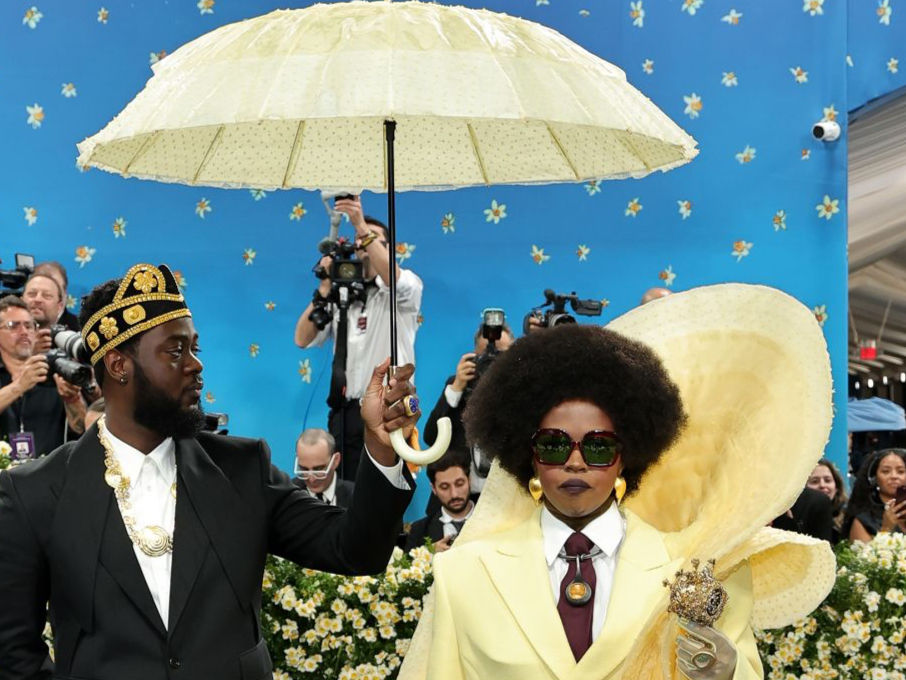
Black dandyism took center stage at one of the most prominent fashion events of the year. Historically rooted in European sensibilities, Black dandyism reclaims style as a form of self-expression and cultural assertion. Even those outside the fashion world were captivated by how stars interpreted the theme.
From tailored suits and wide-leg trousers to durags and brimmed hats, celebrities showed up polished, intentional, and proud—giving a culture its long-overdue flowers. Finally.
Paul Tazewell and the art behind the curtain.
Wicked! Renowned costume designer Paul Tazewell made history at the Oscars.
With an impressive résumé spanning Broadway hits like The Color Purple and MJ The Musical, as well as films like West Side Story, Tazewell has stayed booked and busy. His stunning work on Wicked, which grossed over $750 million globally, earned him the Oscar for costume design—making him the first Black man to win in the category.
His victory highlighted Black excellence beyond the spaces we’re often boxed into, reminding us that the details behind the scenes help shape the worlds we love onscreen.
Boots on the ground, culture on display.
If you’re from the South, then you already know—line dancing is a staple at cookouts and family gatherings. Moving in sync with your people, calling out steps, and feeling the beat together is a bonding experience like no other.
In 2025, one question echoed everywhere: “Where them fans at?” Augusta, Georgia native 803Fresh had folks of all ages pulling on their boots and stomping the ground with his breakout anthem.
The record encouraged Southerners to lean into their authenticity and sparked a nationwide surge in trail rides. These gatherings—often set on dirt fields with tents, four-wheelers, and drinks—evolved into a movement. Though rooted in the South, flyers popped up as far as Los Angeles, proving the region’s cultural reach once again.
Coco Gauff and the discipline of belief.

Go off, Coco. While the 21-year-old already boasts an impressive list of achievements, the French Open hit differently—because she manifested it.
After her win, the Atlanta native shared a note from 2021 where she wrote about dreaming of winning the tournament. She also carried a note in her pocket that read, “I will win the French Open 2025.” Talk about writing the vision and making it plain.
Coco also became the highest-paid athlete of 2025, earning $33 million.
Black love, seen and celebrated.
2025 felt like a Black romance movie we’d all been waiting to see. Every other week, it seemed like someone was getting down on one knee, while others were walking down aisles in stunning gowns, eyes full of tears and joy.
Despite narratives that suggest Black love is rare—or that women of color must struggle endlessly for their happy ending—young Black couples in the spotlight helped shift the story. From longtime partners like Ryan Destiny and Keith Powers to rappers Monaleo and Stunna 4 Vegas, whose pink-themed wedding lit up the internet, love was loud, visible, and celebrated.
We don’t need celebrity unions to validate Black love, of course—but it’s still beautiful to witness. And who doesn’t love love?


Comments